Author Archives: Ken Wong

Keningau secular institute expands with new members

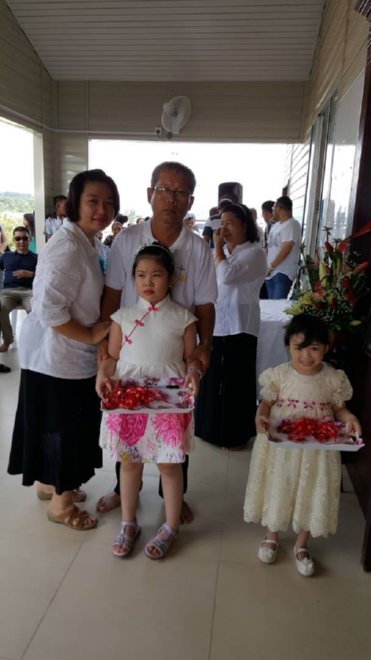
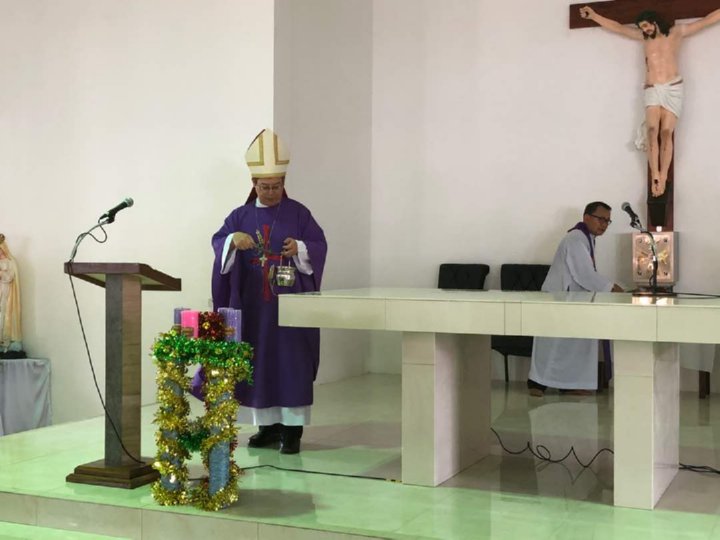
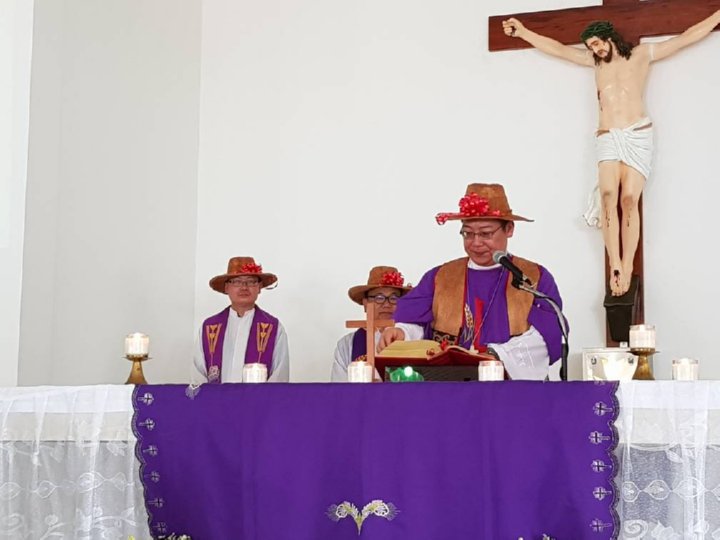
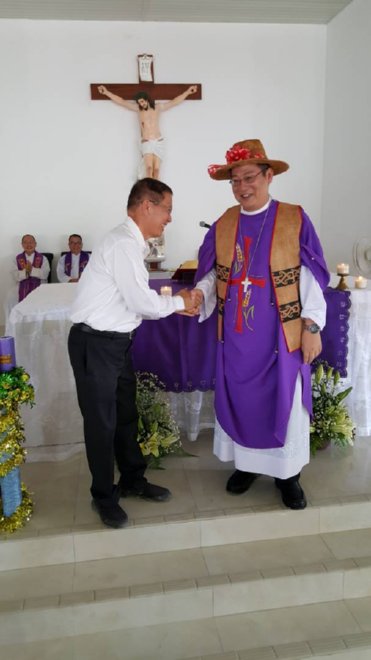
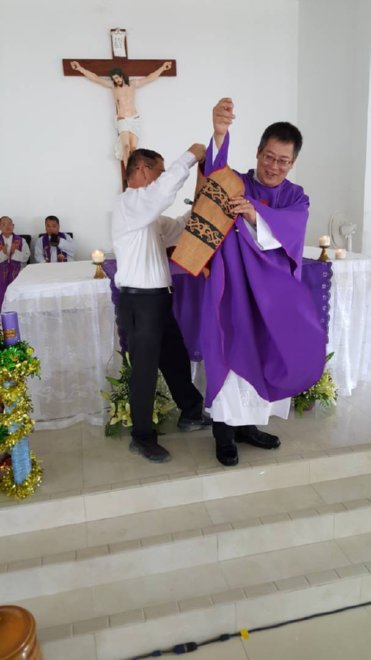
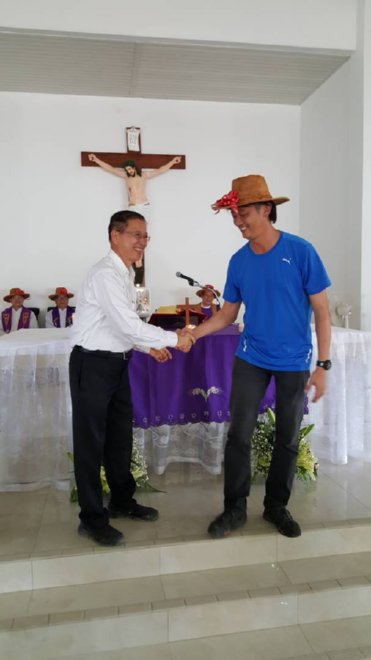
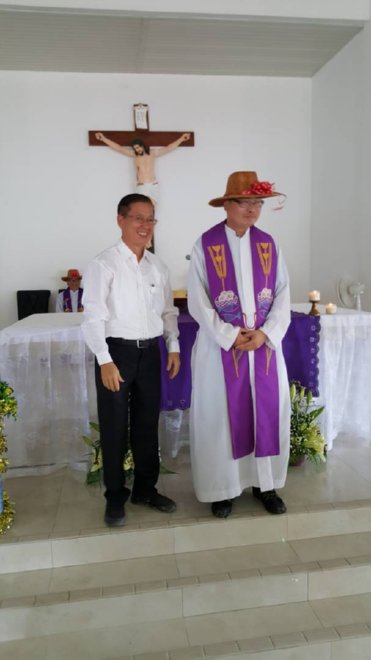
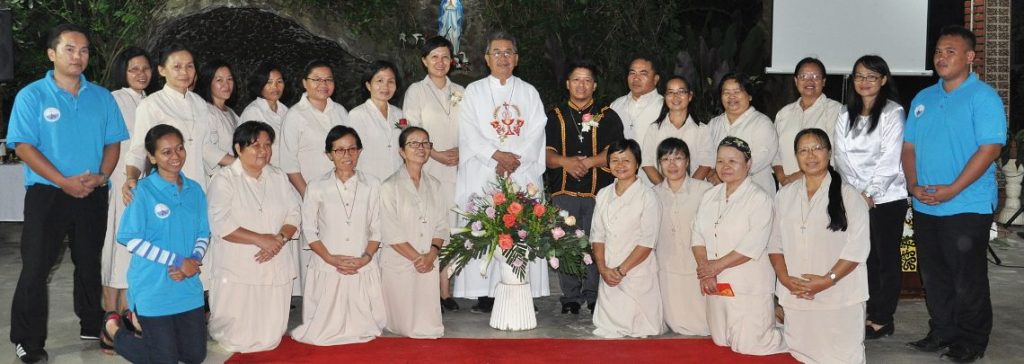
ISKB members pose with Bishop Cornelius Piong after the Mass, 6 Dec 2017, Tatal Keningau.

KENINGAU – The Secular Institute of Komuniti Betania (ISKB) expands with new members.

Janet Leong made her first commitment while Sabius Gatail Luis pronounced his final commitment.  Three others – John Ambi, Winnah Jude, and Melita Petrus renewed their commitment as members of the secular institute.

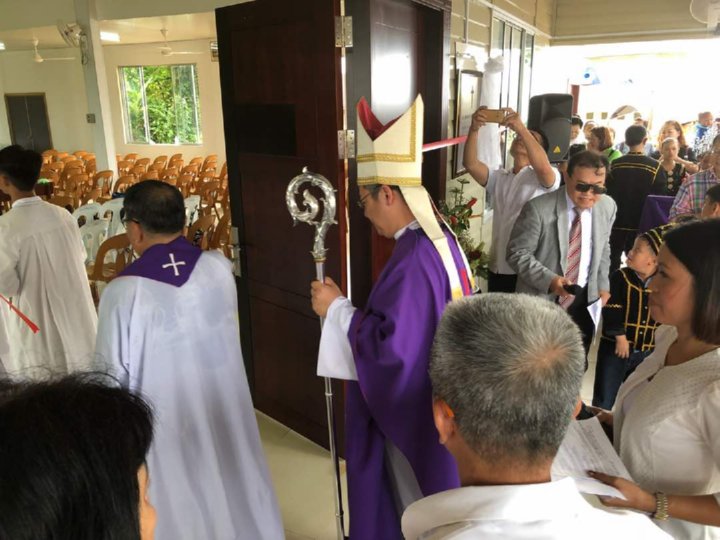
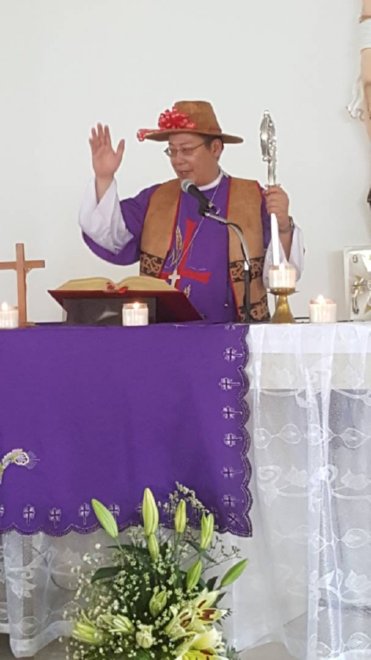
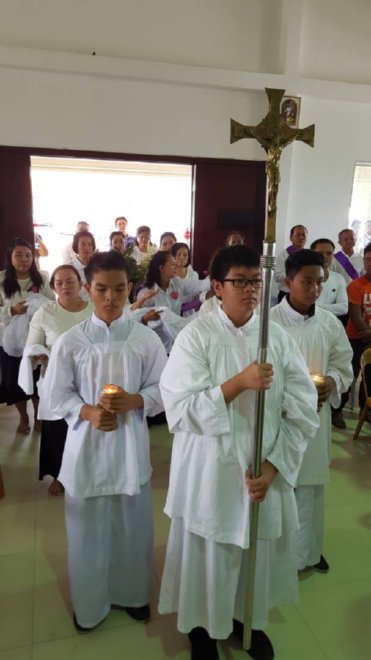
The commitments were made before Bishop Cornelius Piong on 6 Dec 2017 after the homily at the Tatal Retreat Centre here in the presence of around 100 people including fellow members of the institute and family members and relatives of the neo-professed and renewalists.

After Mass, all adjourned for the reception at the hall.

ISKB was founded by Bishop Cornelius piong 20 years ago for men and women who want to live a life of consecration in the world with the vows of chastity, poverty, and obedience.

Currently, it has 20 members with 16 full-fledged members, four juniors, and five observers. – An Richard, keningau website


Article reproduced from Catholic Archdiocese of Kota Kinabalu

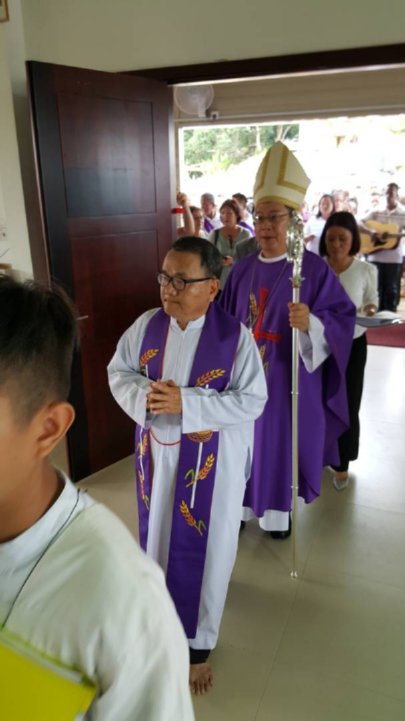
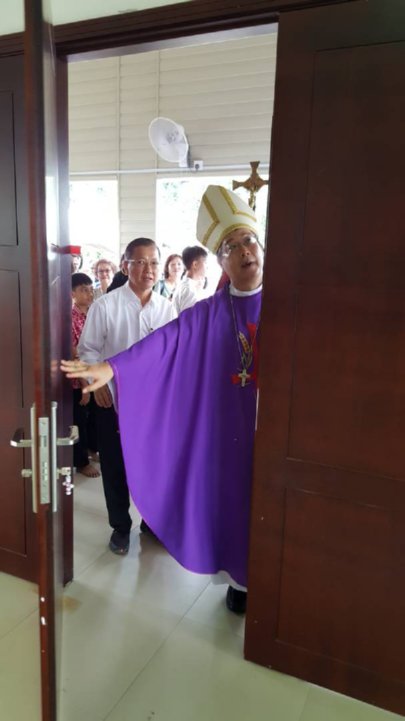
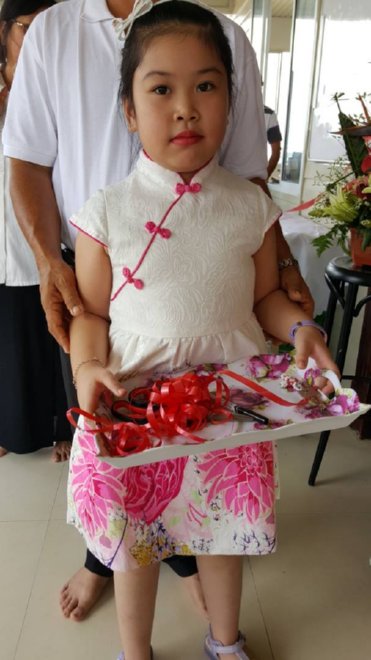
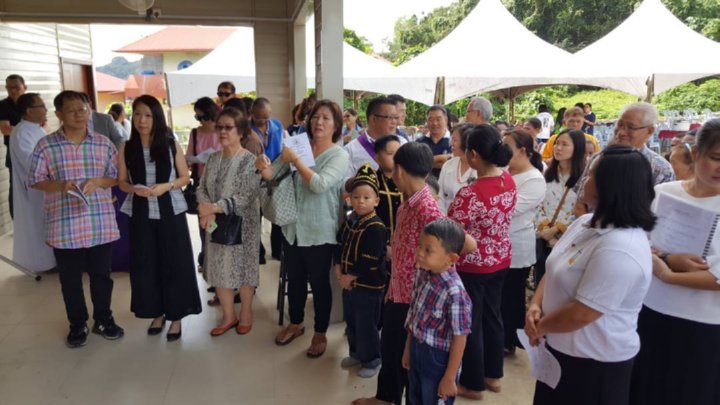
KK prelate blesses new Pamaladan chapel

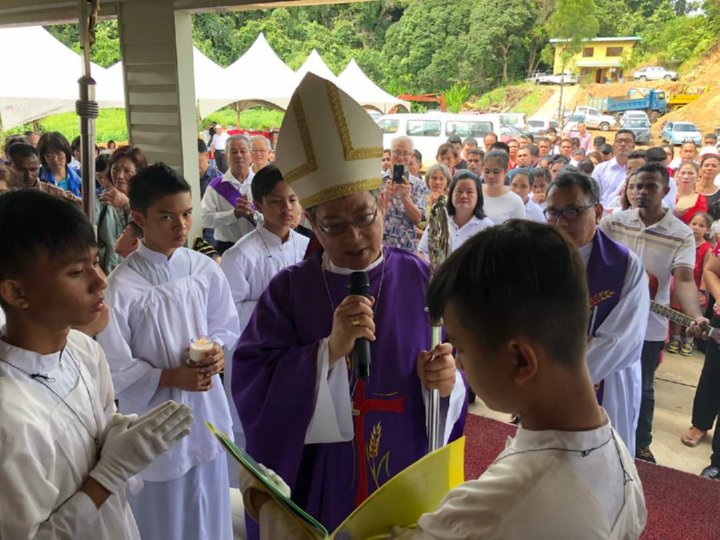
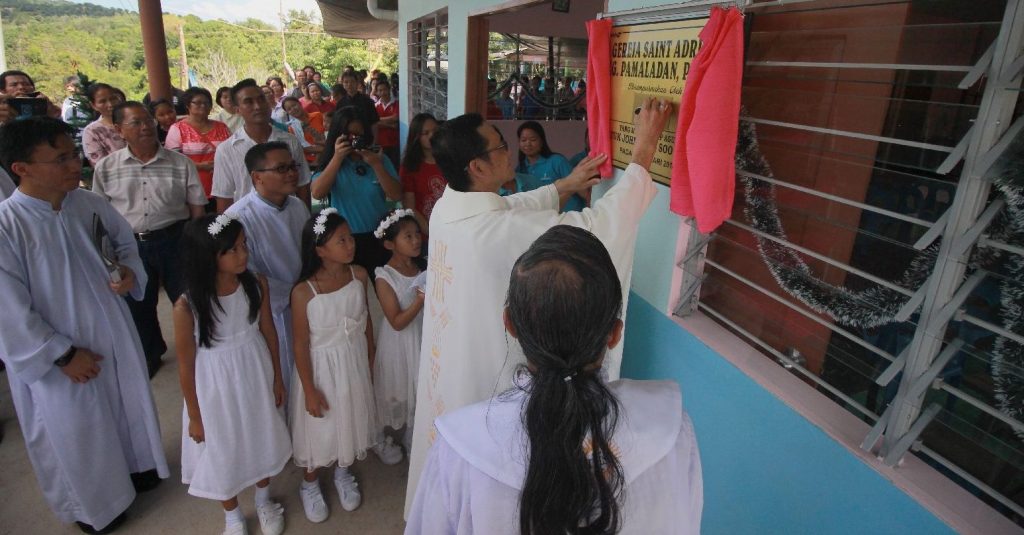
Abp Wong signs the commemorative plaque witnessed by those present, 5 Jan 2018, Palamadan Bongawan Papar.

PAPAR – Kota Kinabalu prelate blessed the newly-built Pamaladan chapel in Bongawan on 5 Jan 2018.

Bongawan is a small town located between Beaufort and Kimanis, and 70 KM away from Kota Kinabalu. The main attraction here lies in the pre-war and post-war British-colony wooden shophouses built in 1922 and 1950 respectively.

In his first visit to the outstation there, Archbishop John Wong officiated the rite of blessing before presiding at the Mass, concelebrated with Father Thomas Yip and Father Rayner Bisius.

Among those present were seminarians Gilbert Marcus and Freddy (former catechist of Ulu Lumagar), Franciscan Sisters and novices, and representatives from Papar, Limbahau, Bongawan and Kimanis.

In his welcoming speech, Adrian Willy, community chairman, thanked Fr Yip for his efforts in encouraging the community to build the chapel.

On his part, Abp Wong expressed his hope that the community will continue to build itself up into a living community.

The blessing of the grotto took place after the Mass outside the chapel followed by a simple fellowship meal for all.

The construction of the first chapel was mooted by Adrian Willy Lobinting of St Michael Mandahan in 1994.  With the approval of Martin Guti, community chairman,  and the advice of Fr Thomas Makajil, the chapel was completed and blessed by Fr Makajil in June 1995.

On 19 June 2016, it was proposed to build a more sustainable building as the community has grown by leaps and bounds.

The construction of the new 25 ft by 45 ft chapel began on 14 Aug 2017 and completed on 25 Nov 2017 at the cost of RM60,000.00 sponsored by a generous donor from Kota Kinabalu.

The old chapel was closed and the first Mass in the new chapel was celebrated by Fr Bisius on 26 Nov 2017.

The chapel is about 40-minute drive from Papar town.  It has a thriving community and has been a venue for many activities such as RCIA classes, Marriage blessings, recollection for youth from Bongawan Zone (Sept 2001), and the youth outreach programme Belia Masuk Kampung (BMK) in Nov 2001 led by Father Bruno Yasun. – William Charles Mindus, SOCCOM Papar/other sources


Article reproduced from Catholic Archdiocese of Kota Kinabalu

New St Martin Church lawas

Lawas is a small frontier town in the northeastern corner of Sarawak state in Malaysian Borneo. The town is located in a strip of Sarawak territory sandwiched between the Temburong district of Brunei and Malaysia’s Sabah state. It is cut off from the rest of Sarawak and is more easily accessed from Sabah. For some years in 1960s, Lawas had been looked after by Fr Lester J. Lonergan, an American Mill Hill Missionary. After his ten years’ of service were complete he had to leave Malaysia and his charge reverted to Limbang.

Photography  and events story  reported  by  Alfred Wong

The Lun Bawang Tribes -compiled by Ben Chang

The Majority of the Lawas community is mainly consisted of the Lun Bawang tribes. The Lun Bawang (formerly known as Trusan Murut or Southern Murut) is an ethnic group found in Central Northern Borneo. In the Malaysian state of Sarawak, the Lun Bawang (through the term Murut) are officially recognised by the Constitution as native of Sarawak and are categorised under the Orang Ulu people;  Historial records show that they are the indigenous tribe native to the highlands of North Kalimantan (Krayan, Malinau, Mentarang and Long Bawan), Brunei (Temburong District), southwest of Sabah (Interior Division) and northern region of Sarawak (Limbang Division).

Lun Bawangs were mostly animist before the 1920s. During these early times, the Lun Bawangs were a dangerous tribe, always on the war path, looking for heads of their enemies.Taking of heads was an indication of someone’s bravery, and maidens love such heroes.The Brooke Adminstration regarded the Lun Bawangs as one of the fiercest and the worst of all the tribes they ever attempted to pacify. The Brooke administration would not permit other people to go up among the tribe for fear of being killed because these natives were fierce headhunters. When they left their old life ways and belief and embraced christianity, the Lun Bawang became the cleanest and the best tribe of Sarawak. Today, many Lun Bawang are highly educated.

The great transformation

The Brooke administration had recorded in the museum journals that the Lun Bawang house had been found to be the cleanest in Sarawak, after being regarded as the dirtiest. It was an indication of the great spiritual transformation taking place among the remaining Lun Bawang who survived the various epidemics that swept their region between 1900 to 1910.

When Hudson Southwell and his friends built themselves a small hut in Sepangah, Limbang in 1928, a group of spiritualy hungry Lun Bawang visited them and became the first Lun Bawang from Trusan/Lawas to become Christians. These individuals went back and a great transformation swept the Lun Bawangf villages- they threw away their old ways, their rice wine and everything and any rituals connected with animism and ancient cultures. No other tribes in Borneo had done such before.

Further conversions continued under the rule of the White Rajahs (Vyner Brooke) in Sarawak. Christian missionaries (particularly of the Borneo Evangelical Mission) had better accessibility to the Lun Bawang settlements in the interior and highlands, and proceeded to preach Christianity to the Lun Bawang people.

Lun Bawang Culture
Today The Lun Bawang tribe is referred by some visitors as one of the most hospitable people they came into contact.In the 1960’s and 1970’s, when they were still living in long houses, any visitor will be invited for breakfast, lunch or dinner as many times as there are families in the long house.For instant, if there are 30 different families in the long house, the visitor or visitors would be invited to eat 30 times.The visitor will be given food to bring when he leaves.In the not so distant past, any one can go up a long house and stay there for the night and they will be taken care of by the long house inhabitants

The Lun Bawang community has a unique culture- the culture of giving. That is why they are very hospitable to visitors. In the not so distant past,they give ration to travellers who put up for the night or two. They are known for giving gifts of all kinds to friends who visit them- an act of good will and gratitude and good heart.You see this culture during wedding ceremony where gifts were exchanged between the families. Those gifts are given by relatives as a show of love and support to their kin. Well their generosity is not only about the giving things but also in helping. They help in any function. In a wedding party, friends come to cook, to do all kinds of work to help the family concern.That is why such festivities are full of joy.


Today the Legacy continues…………….. 

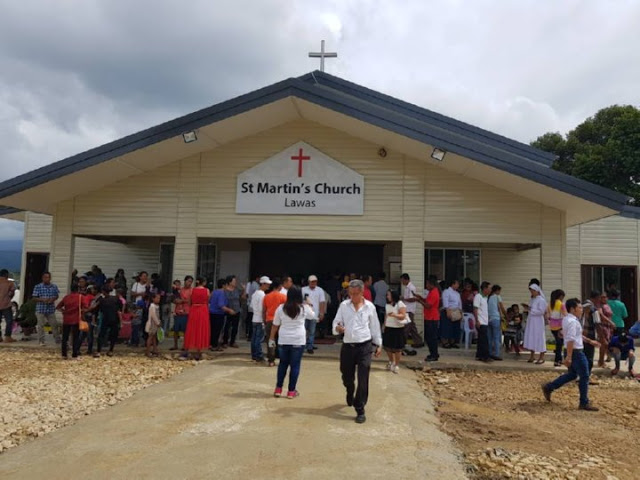
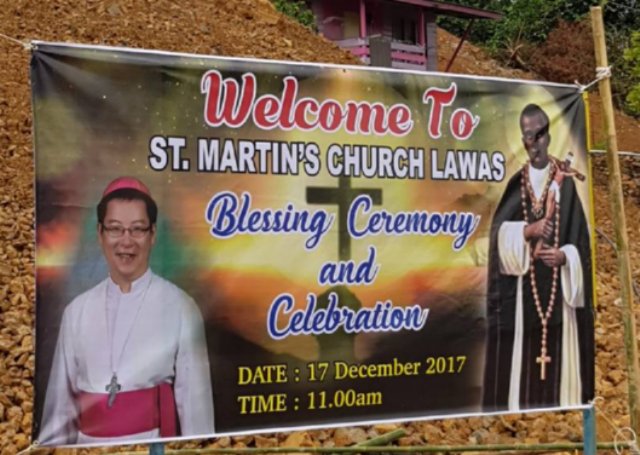
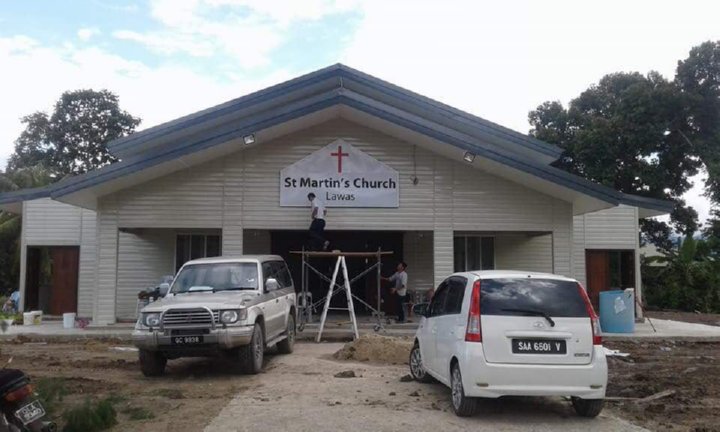
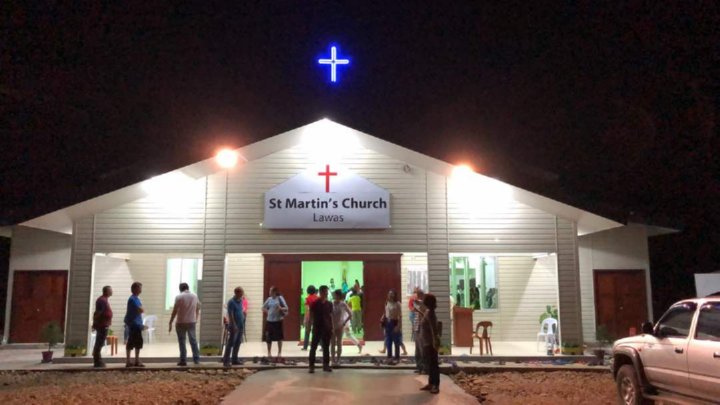
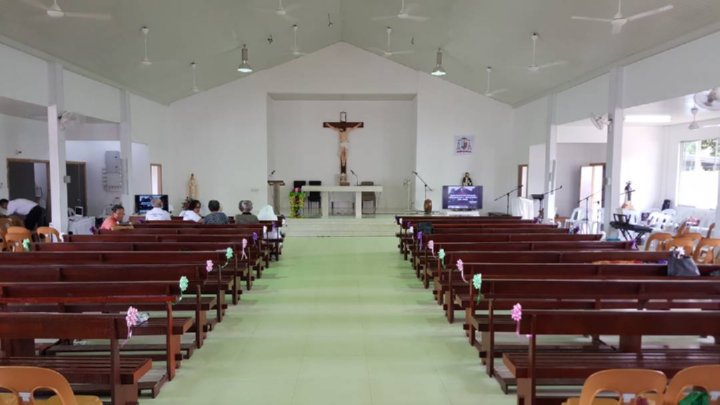
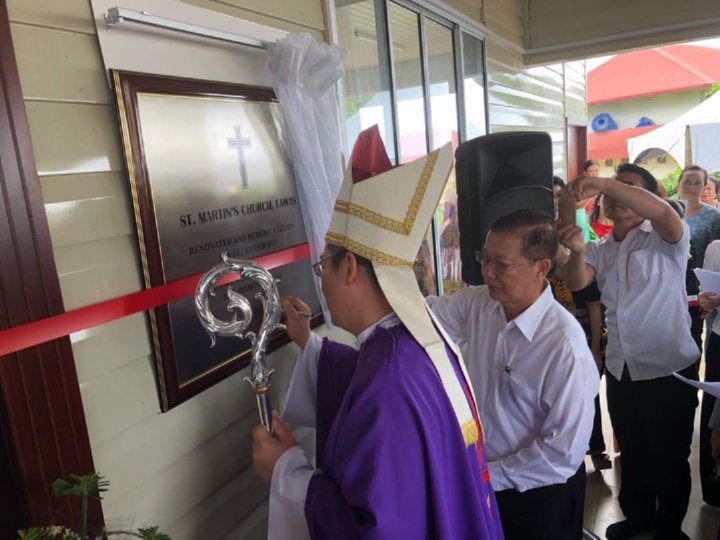
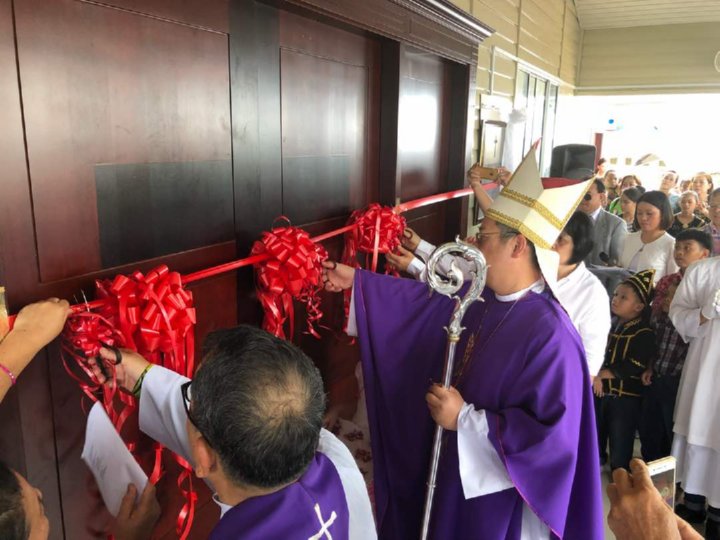
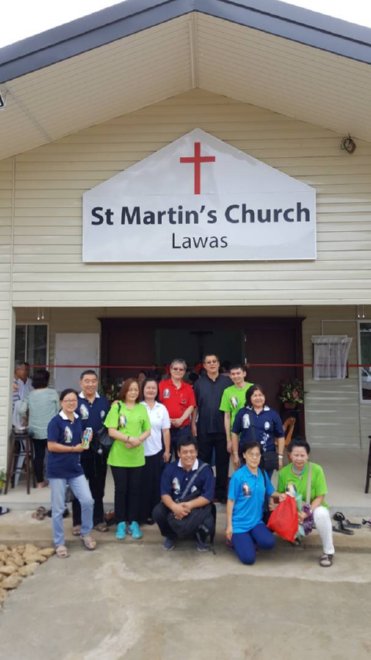
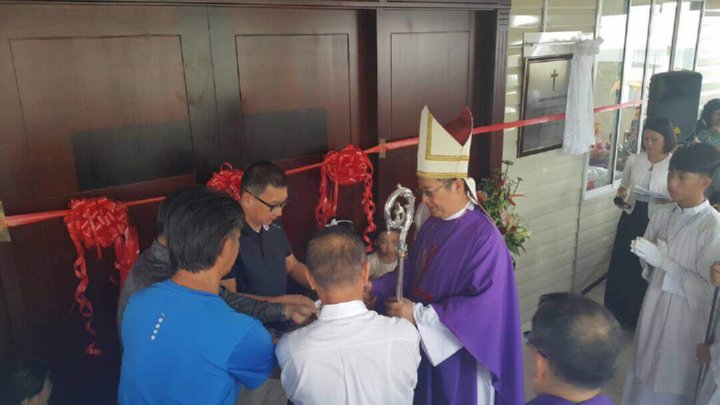
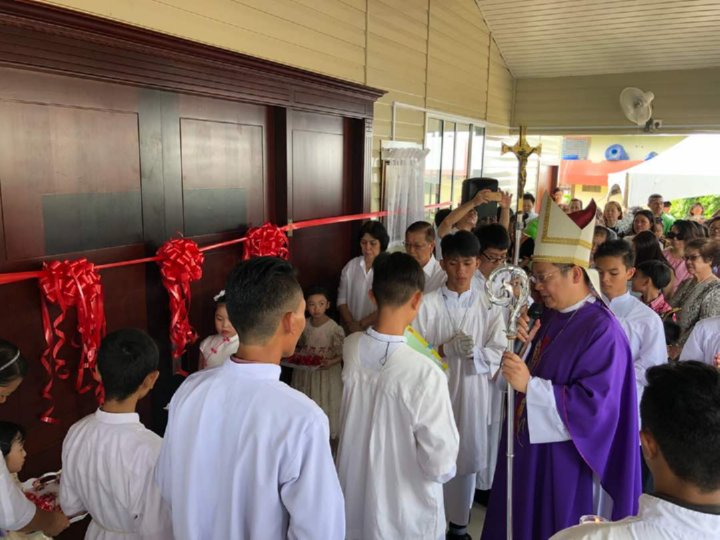
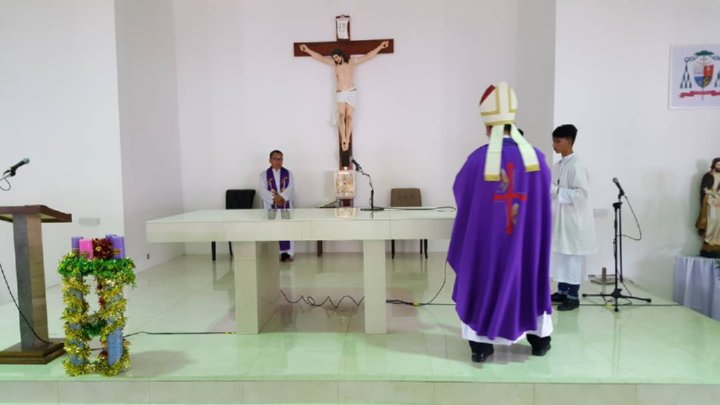
The New St Martin Church, Lawas.


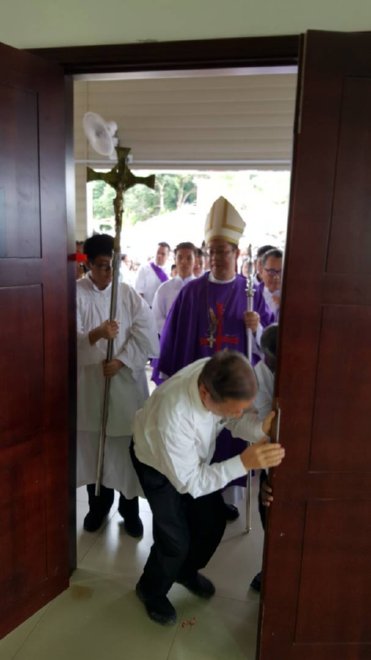
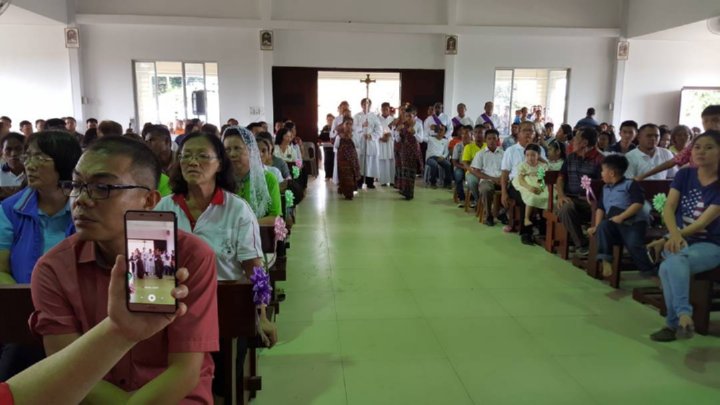
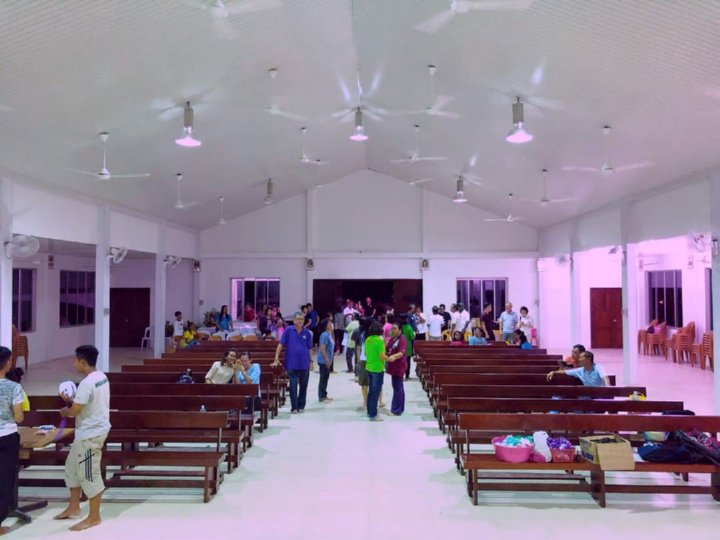
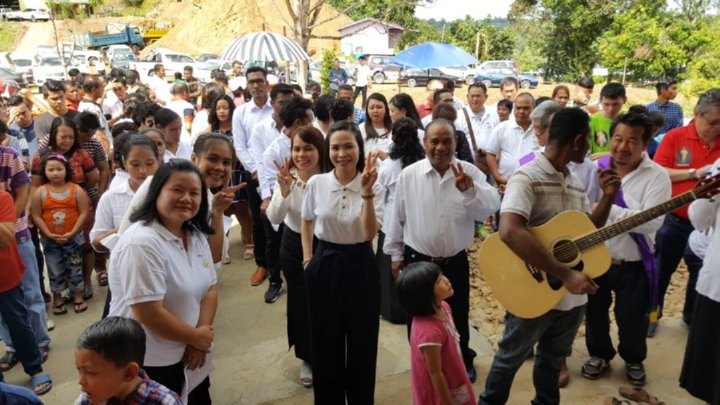
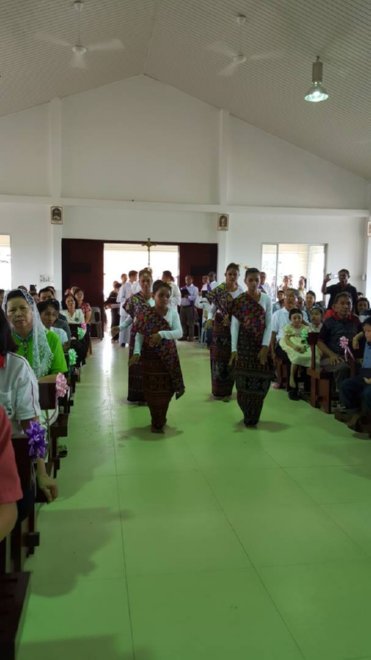
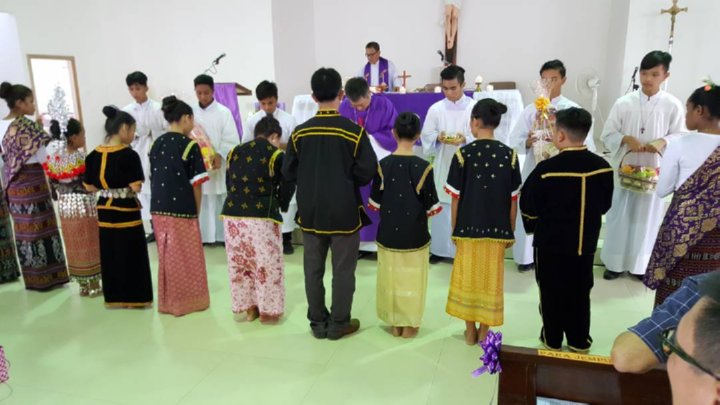
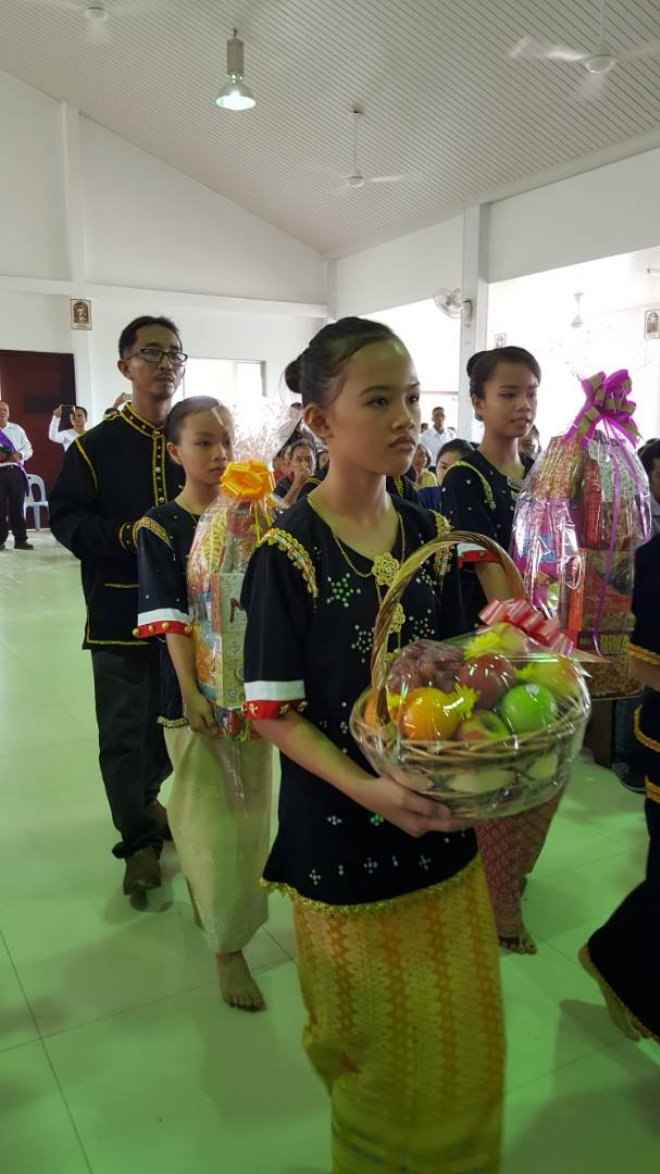
A remarkable event happened on 17th December 2017 when Right Reverend Bishop Richard Ng blessed the new 450 capacity St Martin Church, Lawas.

The idea to build a new church on the existing location of old St Martin Church, Lawas was mooted by Right Reverend Bishop Richard Ng in January 2017 during his pastoral visit to the parish.  The 54 years old wooden church was built in 1964 by Philipino parishioners, constructed primarily of timber with some brick partitions to adjoining extensions added over the years.

The main structure was in bad state of decay and partly infested with termites to the columns and wooden ceilings.  A decision was reached to demolish the existing church and build a new church on existing footprint and increase two side wings for additional internal space.

The existing church was demolished in March 2017 and the new substructural works for the extended wings were completed in April 2017 for a new 6000 square foot church to be erected.

It was decided that the new church was to be built using Amcan IBS building system to be cost effective and faster completion time.  The external cladding is colourbond steel and finished internally with gypsum board.  The main church ceilings is mild steel strip ceilings.  The wall framing of the new church is galvanized steel framing.

Construction of the new church began in May 2017 and by November 2017 the main building including an annex toilet block has been completed and ready for fit-out of the main church fittings and fixtures including lightings and PA system.

The new church comprise of a 4000 square foot main church hall with 2000 square foot at the rear of the building comprising of a meeting room, priest room, Sacristy and two toilet/bath rooms.  There is also  a confessional room and a PA control room at the side of the church.  Externally there is a short walkway linking to the adjacent toilet block for parishioners.

At this juncture, the parish caretaker house is under construction and expected to complete in March 2018.  This caretaker building can also double as house for visiting priests and others.


PEMBERKATAN GEREJA KUK KILUGUS

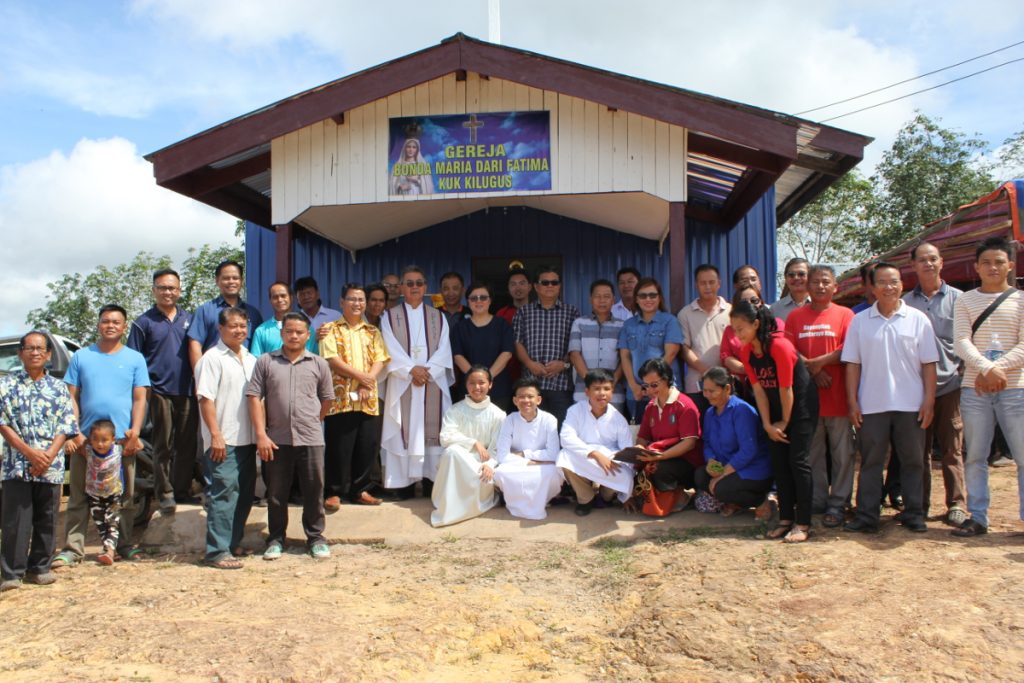
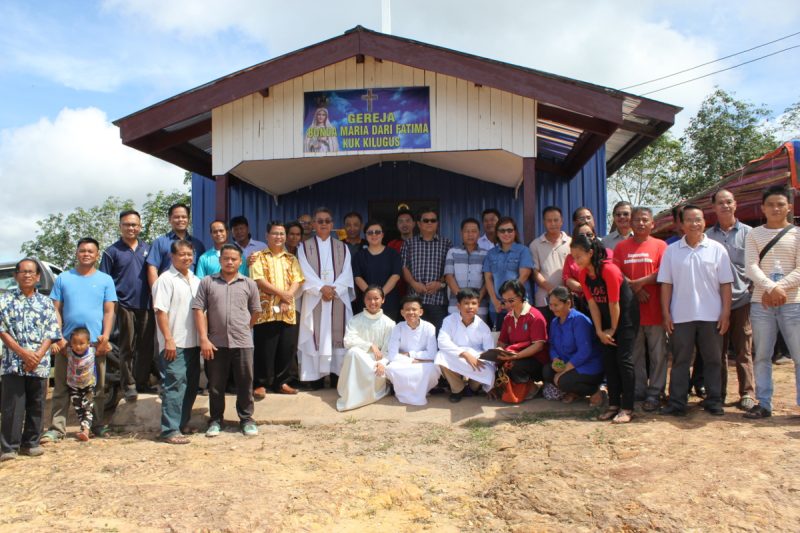
KENINGAU – Perayaan Ekaristi sempena dengan pemberkatan sebuah Gereja Katolik stesen luar Paroki KSFX iaitu Gereja Bonda Maria Dari Fatima, KUK Kilugus telah diadakan. Perayaan ini disempurnakan oleh YM Bapa Uskup Datuk Cornelius Piong pada 09 Disember 2017.

IMG_8426web

Seramai lebih kurang 150 umat telah menghadiri Misa Kudus ini di KUK Kilugus. Gereja ini dahulunya dikenali sebagai Gereja St. Markus Kilugus.

IMG_8455web

IMG_8523web

Perayaan Ekaristi diawali dengan pemberkatan Bangunan Gereja Oleh Bapa Uskup bersama YB Datuk Ellron Angin, UPPM Charles Ikang serta rombongan, Pengerusi MPP Puan Stella Kinsik, Pengerusi Zon, Pengerusi KUK, Katekis dan umat sekitar Zon Minawo.

Uskup dalam renungan singkatnya menyentuh mengenai musim Adven, dimana umat sering kali dalam  kesibukan persiapan perayaan Natal bagi mempersiapkan diri untuk Tuhan, Para Karoles juga sibuk dengan karoling bagi mewartakan kabar gembira. Uskup juga mengajak umat untuk berbelas kasih dengan Tuhan serta bergembira menunggu kedatangan Tuhan. Beliau juga bersyukur kerana umat Kuk Kilugus amnya mendapat Gereja yang baru siap dibina.

IMG_8502web

IMG_8510web

IMG_8514web

IMG_8515web

Uskup juga menyelitkan tiga pesan dalam ucapannya. Sebagai umat, haruslah berbangga menjadi pengikut Kristus kerana Kristus adalah jalan menuju kepada Bapa di Syurga. Yang kedua, menjalankan misi sebagai saksi Kristus setelah melalui pembaptisan dan sudah mengenal Yesus. Ketiga, membina perhubungan melalui firmanNya terutama dalam teknologi sekarang ini yang memudahkan lagi  mendengar Firman Tuhan dalam penggunaan media sosial melalui Kopi Rohani, Fresh Juice dan Embun Guadete bagi menegakkan keimanan.

IMG_8489web

Setelah perayaan Ekaristi selasai acara simbolik dilakukan oleh YM Bapa Uskup Datuk Cornelius Piong yang disaksikan oleh YB Datuk Ellron Angin untuk menanam pokok Pinang sempena nama Kampung tersebut dalam bahasa Dusun iaitu Kilugus(Pinang). – Tadius Kilip


Article reproduced from Diocese of Keningau

Catechetical Sunday message focuses on Christ ‘who hopes in us’

SARAWAK: In his message for Catechetical Sunday on 21 Jan 2018, Father Michael Sia of Marudi Sarawak writes:

We hope in many ways — depending on who we are, and how our circumstances turn out, the ways we hope are determined by what we place our hope in. And we all need hope in order to go forward in life.

However, sometimes we place our hope in the wrong things. As Christians, we do not hope in things, but only in the person of Jesus Christ. Placing our hope in Christ does not mean waiting around for Christ to fulfill his promises, but rather, how much Christ hopes from us — a dynamic, living relationship to Jesus Christ, our Saviour and Lord, who challenges us to become missionaries of his love, overcoming selfishness or lukewarmness, and as the writer of the Letter to the Hebrews says, “He who promised is faithful; and let us … stir up one another to love and good works…,” which, in effect, as Jesus said, means we should do all to exceed the righteousness of the Pharisees (Matthew 5:20).

As we consider what Christ hopes from us, it is clear from the Word of God that lukewarmness or complacency (mediocrity) is distasteful and therefore one who is lukewarm cannot enter the kingdom of heaven (Revelation 3:16). Regular Sunday Mass goers can easily fall into thinking that as long as they stay away from big sins, they are still all right: “Don’t be so hard on yourself, not everything is a commandment, some things are just advised for special situations.” Sadly, this kind of thinking thrives among the majority of us, and this is exactly what Jesus condemns!

St Anthony M Zaccaria expresses it well: “For if you let lukewarmness ensnare you, your life in the spirit will be overcome by the flesh, and, to use the proper word, you will become Pharisees rather than Christians and spiritual persons.

“Now, here is how the lukewarm—the Pharisee—behaves. Having left his old ways, he does not commit big sins any longer but takes pleasure in little ones and does not feel remorse for them. For instance, he stops blaspheming and insulting his neighbor, but he attaches no importance to getting somewhat upset and to insisting on his own opinion rather than giving in to his opponent. Speaking evil of others is no longer a bad habit of his, but indulging quite often in vain and useless chatting during the day is not much of a sin to him. He got rid of overeating and drinking excessively as drunkards do, but he enjoys snacking here and there, between meals, without necessity. The vicious habits of the flesh are a thing of the past for him, but he takes delight in conversations and entertainments that are not so clean. He loves to spend hours in prayer, but during the rest of the day his spirit wanders aimlessly. He no longer seeks honours, but if they are given him, he gloats over them….”

Unless our focus is on Christ and others, self-preoccupation brings the danger of laying heavy burdens on the shoulders of others, without us lifting a finger to get involved or help them (Matthew 23:4). Both, those teaching the faith, and those who receive instruction, can be guilty of excusing themselves from getting their hands dirty in the process of spreading the faith. Pope Francis is well known for challenging pastors to ‘smell like the sheep’ and for laity to ‘get their feet dirty’ walking the streets of the world while evangelising; there is no room for spiritual stagnation if we are filled by the Lord’s hope for us.

Christ is our hope, but whatever we hope for from Christ has already been fully accomplished and given to us in Christ. We should take every opportunity, in society and church community, to receive and respond to the abundance of Christ’s graces found in the Church’s Sacraments and doctrines, daily being converted, from glory to glory, realising that despite sin, grace abounds even more (Rom. 5:20). As the Blessed Virgin Mary deeply entrusted all her hopes to the Lord in her “Yes” (Luke 1:38) to the message of Archangel Gabriel, wholly committed to the life of her Son and Lord, let us do likewise daily, to be more like Christ, in word and deed.


Article reproduced from Catholic Archdiocese of Kota Kinabalu

Servant community of the world

BECs are to have a greater commitment in justice with the social reality of the area.

— they challenge the egoistical and consumeristic roots of society.
— they are centres for human development and promotion.
— they have become dynamic forces for liberation and development.
— they have produced in many sectors of the People of God an integral liberation and an important starting point in the building of a new society.
— stimulate the BEC … so that they can be more generously leaven in the masses, the commitment to transform the world.
— commitment to the family, to one’s work, in the neighhourhood, in the local community is emphasised.
— Where one lives with a different attitude with regard to material wealth.
— where efforts are made in different forms of organisation and participative structures, capable of blazing new trails towards a more human type of society.
— avoidance of being caught between political polarisation or by ideologies of the day.

Vatican Council II, especially in Lumen Gentium and Gaudium et Spes, restates in new terms the Church — World relation. The Church is understood as the People of God, in service to the world, within the world. The evangelical perspective of being leaven, integrated into the whole, is reaffirmed. Penetrating society, not by virtue of size but rather, by the dynamic force that it contains — the leaven is always less than the flour in terms of quantity but its power is such that it is capable of transforming it.

The Church defines itself as the one who takes on the thirst for justice and liberation of the poor; as the one who ought to create alternatives where it is easier to establish an objective relationship of justice and fraternity. Annoucing, denouncing and convoking all Christians and persons of goodwill to commit themselves to the process of liberation which means concretely creating more fellowship and participation, not only at the personal level but also at the level of the social – economic and political structures, helping the people to be the protagonists of their present and forgers of their future.

This new concept and relation between the Church and the world is translated into ecclesial (Church) practice with specific conditions such as the need:

— to perceive the drama of the people;
— to discover not only the necessity of the poor for integral liberation but also their historical capacity to bring it about;
— to esteem their religiosity, integrating it and purifying it from its ambiguities, that is, creating the Church from the response of the faith of the people;
— to reveal the liberating dimension of Jesus (preach what he preached and act how he acted).

The BEC as the grassroot cell of the Church ought to recognise the responsibility of being questioned by God in the events of history and called to answer that challenge. That means to say that concretely, the men and women who make up the BEC ought to be attentive as a whole to the events that take place in the world, the city, the neighbourhood, analysing them in order to discern what is behind the different facts, the human aspirations, the profound sentiments, to be the efforts of the men and women of today. In faith, the Church knows these events are challenges for her. History is not left to the whim of the moment but, rather, the Spirit of the risen Jesus is there, and the Kingdom of God is already beginning in that reality. Besides, the God of Jesus Christ, which the Church recognises and serves, is a historic God: it is in history that He revealed himself, it is in history that his son, Jesus Christ took flesh and it is through history that He continues speaking to his People.

Source: Basic Ecclesial Community: Church from the Roots By Jose Marians and Team, (National Biblical Catechetical and Liturgical Centre, Bangalore, India)


Article reproduced from Herald Malaysia online

The celebration of the Word of God in the BEC

The BEC makes known the Word of God. It creates a greater acceptance of the Word of God.

— In the small communities, there is growth in the experience of new interpersonal relationships in the faith and a deepening in knowledge of the Word of God.

— They celebrate the Word of God in daily life.

— They seek to be nourished by the Word of God.

— They provoke an evaluation of the lifestyle and a reflection on reality in the light of the Gospel.

— In the BEC, family catechism and education in the faith of adults take on a more adequate form, responding to the needs of the simple people.

— They express, appreciate and purify the popular religiosity.

— The ecclesial community is becoming responsible for the catechism at all levels’.

— The emphasis of the BEC is on… faith that is shared more spontaneously in small communities.

The person of the Lord Jesus, crucified and resurrected, occupies the centre of the life of the BEC. The Christology that is being lived among us comes from a new grasp and understanding of the life and mission of Jesus in the light of the social and cultural context of the BEC. .. the meaning and the immediate consequences of the following of Christ and the contradiction of the Cross is better situated and explored.

The life of Jesus is seen as an eloquent experience of fidelity to the Father and of commitment to humanity in a concrete, historical context. Jesus is the friend who invites us to follow him in a new experience of a new communion and community in a more prophetic lifestyle: committed to the service of others.

The education in the faith of the members of the BEC is from this Christological perspective, seeking to awaken strong interior motivation, (convictions, decisions) and not only exterior motivations (circumstantial). So that, even when problems and difficulties arise, the persons do not lose the sense and direction of their action and persevere until the end.

The BEC, therefore, is the means by which the faithful deepen and are educated in their faith so that it becomes evermore the inspiration of their life and attitudes. This education of the faith, can be and is, done in study groups or in bible groups. It is important to always bear in mind the two risks that can be present; on the one hand, the scriptures and doctrine remain merely objects to be taught and learned and not the source of life; on the other, being so immersed in activity that the basic doctrinal references are lost from sight.

There is always the need for theory in order to view reality. There is nothing more practical than a good theory. In order to integrate doctrine and life, the BEC ought to conduct special sessions for the depth of the faith, where the life of the Community is constantly seen as a permanent education in the faith.

At the same time, there should also be sessions where the reality is analysed and interpreted, where there is reflection with regard to commitment. From time to time, it is also necessary to provide for a systematic study of the different aspects that represent the globality of Christian life so that the members can have a good frame of reference for life and mission.

The study of the Gospel ought to be intensified in an existential way so that it is translated into vital modes of action and behaviour. One has to be faithful to the nature of the Word of God (word and action).

The Word of God possesses a truth that must be deeply learned. It is the encounter with God as a person, a living encounter where the listener feels that he has been touched and questioned by another living person — God.

Therefore, more than teaching a truth, it is to bring alive an encounter with God and each one of the members of the BEC. It is evident that this type of encounter will be easier if the animator himself has the personal experience of what he is saying. He has to be more of a witness than a teacher.

Growing in the faith is not the same as taking a course. It is more the sharing of experiences in order to grow together in the faith. This experience is nourished by the Word of God, which purifies, corrects it and helps it to progress.

The Word of God is Good News. Understanding it, the person discerns new reasons for living and for hoping, for being happy and for improving in life. The Word of God is not merely a series of demands, of moral rules and laws. If it were just this, then it would be an unbearable joke. It is much more the Good News that frees the person from all that oppresses and mutilates.

It ought to renew the person, giving him the assurance and security that he/she can overcome and be fulfilled in and through Jesus.

Source: Basic Ecclesial Community: Church from the Roots By Jose Marians and Team, (National Biblical Catechetical and Liturgical Centre, Bangalore, India)


Article reproduced from Herald Malaysia online

CFM: Church will always remain non-partisan

The Church will always remain politically neutral, even if Christians are not, the Christian Federation of Malaysia (CFM) said on Dec 25.

CFM vice-chairman Rev Eu Hong Seng said Churches in Malaysia hold the same position taken by Jesus Christ, which is to be a non-partisan religious leader.

“As the general elections are around the corner, I would like to take this opportunity to remind all on this Christmas Day that our Jesus is a non-partisan religious leader.

“Allow me to reiterate that the Church, rightly, is non partisan. But we are always pro-justice and pro-righteous. We have Christians on both sides of the political divide,” he said during his speech at the group’s Christmas hi-tea event.

The event was attended by politicians from both sides of the divide, including two Ministers in the Prime Minister’s Department, Tan Sri Joseph Kurup and Datuk Paul Low, Opposition leader Datuk Seri Wan Azizah Wan Ismail, Penang Chief Minister Lim Guan Eng and DAP’s Teresa Kok, among others.

Eu however stressed that while the Church remains neutral, Christians should still partake in the politics of the nation, including going out to vote.

“But that does not mean that individual Christians cannot be involved in politics and social activism of the day.

“So vote we must, and after we have voted, in God we trust,” he said.

Representing Prime Minister Datuk Seri Najib Razak, Kurup stressed that unity is key for Malaysians to progress and they should be tolerant towards other races and religions.

“We have to respect other groups that may have different values. We are at our strongest when we are united as one, even if there is a difference of religion,” he said.


Article reproduced from Herald Malaysia online
US Ambassador attends Christmas Eve Mass

KUALA LUMPUR: US Ambassador to Malaysia, Kamala Shirin Lakhdhir, had the pleasure of attending the Christmas Eve Mass celebrated by Archbishop Julian Leow at the Chapel of Kristus Aman in Taman Tun.

Ambassador Lakhdhir admires Malaysia’s proud tradition of religious diversity. One of the highlights of the Ambassador’s first year came in November when she first met the Archbishop during a US Embassy-sponsored Harmony Walk celebrating interfaith cooperation and understanding.


Article reproduced from Herald Malaysia online
Indonesian Catholics ministered to in CDM, Penang

A group of Indonesian migrant workers, dressed in their Sunday best, gathered in Faustina Hall of the Church of the Divine Mercy (CDM) after the morning Mass on Dec 10 for a meeting with Fr Yohannes Baptista, a priest from Flores, Indonesia.

They had made their way to Sungai Ara from various locations around the island, some travelling by bus while others came by taxi. There was even a group who had come from Teluk Bahang, leaving their quarters by 6.30am in order to arrive in time for the 9.00am Mass. It is a journey they undertake every Sunday, but this Sunday was different. Fr Yohannes had come especially to minister to them during this season of Advent. They had found out about this event through the parish announcements and from their Whatsapp chat groups.

While waiting for the arrival of Fr Yohannes, the CDM Migrant Ministry served up a light meal of fried rice, bee hoon and jelly. Everyone present was most appreciative. A number of local parishioners also dropped by for a chat to foster a spirit of fellowship with our migrant brothers and sisters.

It was a great opportunity to get to know them better and make them feel more at home in this church community. They talked about their jobs in construction, manufacturing, etc. Most of them have been working in Penang for three-five years and there was even one person who has been working here for as long as 17 years!

During his sharing session, Fr Yohannes emphasised the importance of face-to-face communication. He reminded his audience of Pope Francis’ exhortation to promote a culture of encounter (budaya perjumpaan).

He went on to explain that even though social media helps us to make connections, there could be no encounter if we do not make the effort to meet people, talk to them, listen to them and empathise with what they are telling us. For example, for the people of his village, he had brought the outside world to encounter them through a series of short films which he had made about their lives.

Fr Yohannes said that it was his hope that these faith-based films would be used to educate, catechise and promote the culture of encounter with those outside his village. (Fr Yohannes’ short films may be viewed online on YouTube channel Komsos Agung Ende. He may be contacted through his Facebook page https://www. facebook.com/yetra.kotten) At the end of the session, Fr Yohannes reminded the parishioners to pray and to put their faith in God. He also invited them to practise the Sacrament of Penance, which many accepted after the gathering.

Overall, the response to the event was most positive. Some said that they appreciated the effort that had gone into making the arrangements to bring such a well-known person of their nationality to CDM. One young lady who had been given a rosary by Fr Yohannes during the fellowship was quite visibly moved as she had never owned a rosary before then. Fr Yohannes himself said that he felt very blessed at being able to meet and minister to so many Indonesians working here.


Article reproduced from Herald Malaysia online
error: Content is protected !!