Author Archives: Ken Wong

POHD seeks assistance to aid storm victims

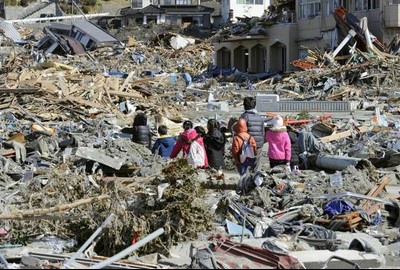
PENANG: The storm which hit the states in the northeren region (Kedah, Penang and Perak) on November 5 was recorded to be the worst in recent history. Heavy rains and strong winds which led to floods and winds, caused massive damage and also lives lost, especially in Penang which was affected badly by this natural disaster.

Even The Lighthouse community service centre, which feeds the homeless and destitute, run by the Penang Office for Human Development (POHD), was not spared from this predicament. The roof of our two houses was blown away, and the café, thrift shop and laundry were also damaged and leaking badly.

In providing relief to the affected areas POHD, through the help of the various ministries in the parishes in the diocese, have mobilized a group of volunteers to survey the affected areas and provide assisance in whatever way possible to anyone who is in need.

Urgent help is needed especially in those areas that are the hardest hit. Some parishes have been given financial asistance to respond swifly to provide for the immediate needs, such as, food and clean water to the victims before further help arrives. so that the lives of these people may be restored and return to normalcy. Special thanks to the Archdiocese of Kuala Lumpur who has come forward with a sum of RM100,000 and the Diocese of Malacca-Johore with RM200,000 to help with the relief efforts.

Those who wish to volunteer kindly contact Christine at 012-4025292, and those who wish to contribute financially please contact the Penang Diocesan Office at 04-2292742

Cheques made payable to : PENANG OFFICE FOR HUMAN DEVELOPMENT.


Article reproduced from Herald Malaysia online

Ara Group BEC celebrates 41st anniversary

One of the longest running and active BECs in Penang, Ara Group 4 of the Church of the Immaculate Conception, held a very joyful 41st anniversary celebration at the home of member, Sarah Toh, in Tanjung Bungah recently.

More than 70 members from nearby BECs and friends turned up for the Mass which started with rosary prayers.

In his homily, Fr Nelson Joseph said the area group members had gone through 41 long years together and prayed that it would continue to do so for many years to come.

“You have all come together to celebrate this 41st anniversary as God’s faithful and obedient children and I am sure you have gone through a lot of good times and trials.

“I pray that you will all continue to be together and celebrate your anniversary with the same zealousness for many years to come,” he said. “I bless all of you here present and also those who were unable to be here,” he added.

After the Mass, Fr Nelson joined the attendees for fellowship.


Article reproduced from Herald Malaysia online

Christ statue demolition put on hold

MELAKA: Malacca Chief Minister Idris Haron has intervened in the demolition of a replica of a statue of Christ the Redeemer in the Portuguese Settlement in the state.

However, this reprieve is temporary, said Malacca Historic City Council (MBMB) member Joseph Sta Maria on Nov 6.

“We have to thank the CM for not ordering the structure to be demolished (straight away). The clock was ticking and we had no other avenue,” said Sta Maria.

He said the construction of the statue was done without proper approvals.

“I admit that it’s also partially our fault for not getting approval before going ahead with the construction at the settlement,” Sta Maria said.

MBMB had ordered that the statue be torn down by Nov 6.

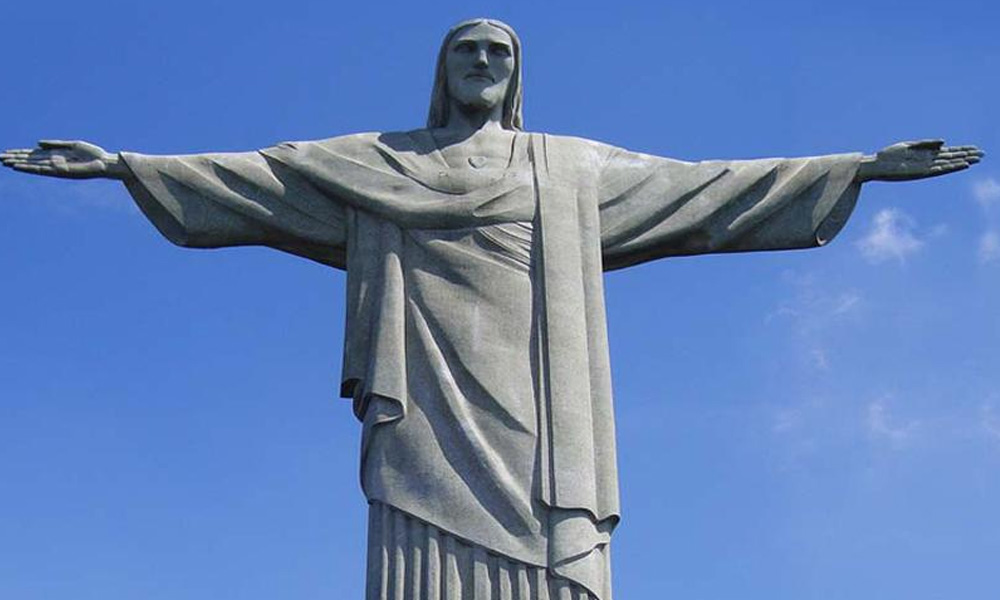
According to Sta Maria, Portuguese community leaders had constructed the statue, based on the iconic Christ the Redeemer statue in Rio de Janeiro, for this year’s Christmas celebration.

He said community leaders wanted the statue to reflect the settlement’s identity as a beacon of Catholicism for the last 500 years.

“Our intention was only to reflect the identity of the majority Catholic adherents in the settlement,” he said.

Sta Maria said a plan was submitted to MBMB in September and it has yet to be approved. However, the construction took off early in order to get the statue ready by Christmas.


Article reproduced from Herald Malaysia online

Disaster is inevitable in Japan, but paralysis is not

Many years ago, I ran across a humorous coat of arms that showed spilled milk and ink, jammed gears with monkey wrenches, tangled coat hangers and a broken pencil. I made a copy that still decorates my home as my appropriated coat of arms. At the bottom is a scroll with the Latin inscription, Calamitas Necessaria Est (disaster is inevitable).

That could be the motto of Japan.

The ward of Tokyo in which I live distributed to all of us residents a book, the title of which translated into English is Not If, When. It is about disaster preparedness.

With volcanoes, earthquakes, tsunamis and typhoons, along with the usual sorts of disasters like fires, floods and landslides, Japan is, indeed, a place where we do not think and speak of the possibility of calamity. We prepare for its unpredictable but inevitable occurrence.

Japan’s history of sudden destruction has played a key role in the development of Japanese culture. There are two phrases that come out of that history that provide lenses through which to look at Japan today.

The first is shikata ga nai. Shikata means a way to do something. Nai means “is not.” (Ga is a grammatical marker.) In other words, nothing can be done. There is no way to prevent an earthquake, tsunami, volcanic eruption or typhoon.

As the frighteningly erratic leaders in North Korea and the United States rattle nuclear sabers at one another with Japan in between them, the country is facing yet another situation that is not amenable to its control. Friends from outside Japan have asked me how the Japanese (or, for that matter, I) deal with that.

A system to alert citizens to missiles headed into, or through, Japanese airspace and “duck-and-cover” drills have been introduced in some parts of the country. But, generally speaking, people are not allowing the situation to affect their lives. Why waste energy worrying about something over which we have no control? Shikata ga nai.

It is easy to imagine that such an attitude could lead to communal paralysis or resigned fatalism: nothing can be done, so let’s just resign ourselves to the inevitable. It might also lead to a sybaritic “eat, drink and be merry, for tomorrow we die” attitude.

However, that is not the case in Japan.

During the night of March 9-10, 1945, more people were killed by an incendiary bombing raid on Tokyo than in either Hiroshima or Nagasaki and, perhaps, more than in those two atomic attacks combined. Going to the internet and looking at photos of Tokyo in 1945, it is hard to imagine, though we have seen it ourselves, that the devastated city would, in 30 years, be the capital of the number two economic power in the world.

Part of that “miracle” is in the word that follows the disastrous: ganbar?h. The “?” ending on a vowel means, “together let’s”…” Ganbar?h means, “let’s get to work!”

People who contacted me from other countries following the 2011 earthquake and tsunami in northeastern Japan that took some 17,000 lives, left hundreds of thousands homeless and caused the explosion of a nuclear power plant expressed surprise that there were no reports of looting, rioting or other forms of social unrest. One friend said he was “bowled over” when, on a news report, he saw an elderly woman in a relief centre who reached the head of the line just as the supply of food ran out. She simply bowed and walked away. No complaints, no histrionics.

Those of us who know the Japanese and the spirit of ganbar?h were not surprised. That spirit is marked by unity, focused activity, cooperation, diligence, unselfishness and good manners.

It was that spirit of cooperative action that enabled Japan to make a better, quicker and fuller recovery from the destruction and defeat of World War II than did some of the victors.

That example may not be of much use to other countries. Cultures do not change quickly, not because another culture looks good from afar. It probably took centuries of experience for Japan’s culture to adapt to its disasters.

However, what is not possible for whole cultures is possible to people who live in them. It is possible for individuals from other cultures to learn something from the Japanese attitudes of shikata ga nai and ganbar?h. I hope I have. Instead of fruitless fretting over that which we cannot control, we could develop the ability to work with others unselfishly and effectively.

In fact, Jesus may have recommended some degree of shikata ga nai when he said, “do not worry about tomorrow, for tomorrow will bring worries of its own.”

We, who claim to believe that nothing “will be able to separate us from the love of God” should be especially willing to spend our energy on preparing ourselves to serve after disasters small or large, social or personal rather than obsessing about their inevitability.


Article reproduced from Herald Malaysia online

Padre Pio and his concern for the sick

IPOH (Herald Malaysia): The feastday of Padre Pio, the saint with the stigmata of Christ, was celebrated on Sept 21 at St Michael’s Church, with a novena and Mass.

It was a special day of prayer for the active and devotional members of the SMC Padre Pio (PPG) who asked for St Pio’s intercession for the healing of the sick and the suffering.

Fr Paul Kee CSsR in his homily said that Padre Pio, like Jesus Christ, helped and healed thousands of people.

His missionary style of not sparing himself from difficulties and sacrifice, to “help all, serve all, be compassionate and kind to all” was simple but effective.

“For nearly fifty years since his death, many have been going to San Giovanni Rotondo for healing,” Fr Kee said.

Besides hearing confessions and celebrating Mass, Padre Pio wanted to build a hospital for the suffering, called the House for the Relief of Suffering, on a mountain in San Giovanni Rotondo, which is remote and located close to the friary where Padre Pio lived.

He provided the first donation to build a place that would be open to every kind of illness and give assistance to all who came.

He told only his closest friends and people who would help him. There were many who opposed the building of such a hospital in such a remote place.

But approval was given, and as news of the proposed hospital spread, many came forward to donate and help.

Padre Pio’s dream became a reality nine years later and on May 5, 1956, when it was opened, Padre Pio offered Mass on the steps with 15,000 people present. Pope Pius XII blessed the building.

“Padre Pio was a man who practised charity, love and the compassion of God to benefit others. We can learn from him to become more like Jesus Christ who helped all, whether they were good or bad,” Fr Kee said.

After communion, there was a blessing, followed by anointing. Each person was also given a special prayer card and a bookmark with the image of Padre Pio.

Through the efforts of Fr Liew, who is PPG’s spiritual director, it also received a firstclass relic of St Pio at the end of Dec 2014.

The relic, from Rome, is a small piece of the blood-soaked mitten worn by the Capuchin Saint over the wounds of the stigmata on his hands.

It is now enshrined in a framed picture of St Pio at the side of the church altar.

The PPG holds its novena devotion to St Pio every Thursday, followed by Mass.

Those interested to join the PPG as volunteers or to register the sick, should contact the SMC parish office.


Article reproduced from Herald Malaysia online

Large turnout at St Jude’s Feast in Gopeng

GOPENG, Perak: There was a large turnout for the annual Feastday at the Church of St Jude on October 29. The faithful came to make the annual pilgrimage to pray for their personal needs.

Bishop Sebastian Francis was the main celebrant, with St Joseph Batu Gajah parish priest, Fr Edmund Woon, concelebrating.

During the celebration, Rocky Silvester Loo was installed as a lector and acolyte. He was ordained as deacon on Nov 10 at the Church of St Patrick, Kuala Kangsar.


Article reproduced from Herald Malaysia online
Flash floods expected to worsen and become more intense

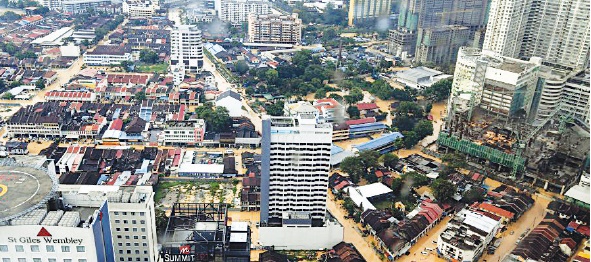
PENAMPANG: The Penang government on Nov 5 conceded that the floods currently affecting more than 100 areas in five districts in the state since Nov 4 was due, in part, to its drainage system.

State local government, traffic management and flood mitigation committee chairperson, Chow Kon Yeow, admitted that the existing drainage system could not accommodate the huge flow of water during heavy rain.

“The existing natural and man-made drainage systems could not cope with the flow of rain, especially since the very strong rainfall in all five districts, causing many areas to be flooded,” he told reporters.

The extraordinarily heavy rain since 2.00pm on Nov 4, which coincided with the peak of the high tide phenomenon, also contributed to the flash floods, he told reporters.

A scientist says flash floods on Penang Island are expected to worsen and become “more intense,” based on a study of past rainfall and increased development.

Kam Suan Pheng, an expert in soil science, said the island was now more likely to experience flash floods even after a short period of rain.

She said the heavier-than-usual rainfall these days doubled the likelihood of flash floods.

She said this was because the island has a complex mix of terrains and river systems compared with mainland Seberang Perai and, due to development, it had been unable to cope with excess rainwater.

“If you look at what the Penang state is like in terms of topography and hydrology, the island and mainland Seberang Perai’s rivers are different.

“The island has a more complex terrain and the natural drainage system is complex. With more hilly land down the spine of the island, rivers are shorter and faster flowing.

“Seberang Perai has a larger floodplain and fewer high lands. On the island, the population is denser, so we can expect floods to be felt more intensely,” she told a dialogue hosted by the Penang Forum today.
Kam said the natural system was once able to cope with increased rainfall but this was no longer true as more land had been developed.

She said the system was akin to a “sponge” that stores rainwater. It fed trees and evaporated to aid the natural rain cycle.

“When places get urbanised, the sponge gets smaller. So when there is development, the excess rainwater gets less absorbed into the ground and comes off as flash floods,” she said.

She said these “sponges” were usually the hill land, farmlands and riverbanks, which were mostly developed.

Kam said, after the hills were cut, rainwater came down these hills with mud and later flowed into rivers.

The rivers, in turn, became silted and shallower, carrying the teh tarik coloured floodwaters, she said.

Kam said the Penang government should have better planning of its land use and control development to prevent more intense flash floods in the future.

She said more trees should be planted, more large-scale parks created and the island’s rivers should be given space to widen.

She also said development projects should not be allowed on riverbanks.

Kam said the current flood mitigation projects by the state were fine but they merely treated the symptoms instead of curing the root cause of flash floods.


Article reproduced from Herald Malaysia online
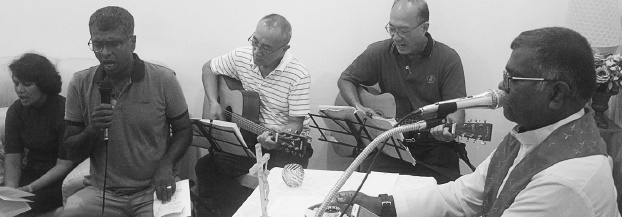
Seventy children receive the Eucharist at SIC

Will you bring your children to attend Mass every Sunday? Can you attend Mass quietly and attentively? The first question from St Ignatius Church (SIC) Parish Priest Fr Andrew Wong CDD was addressed to the parents of 70 children from SIC’s Standard 3 First Holy Communion Class of 2017 towards the end of Sunset Mass on October 21. The second question was meant for the 34 boys and 36 girls who had received Jesus, the Bread of Life, for the first time from Fr Wong and Assistant Parish Priest Fr Lawrence Ng CDD.

Fr Wong also reminded the parents of their critical role as the first and primary catechists of the Christian faith — not Sunday school teachers.

The first communicants were reminded that they had been incorporated into the One, Holy, Catholic and Apostolic Church through Baptism, the first sacrament, while infants. On this day, the children received their third sacrament, the Body and Blood of Christ in the Eucharist. In addition to the gifts of bread and wine, the children also offered up their First Holy Communion certificates – a symbol of remembrance of the first time they became one in the Body of Christ – as well as the Camp Crafts Prayer Cards.

The children then sang Jesus, Lamb of God and Thank You Lord in dedication to the congregation, followed by the Parents’ Pledge led by Bernard and Caroline Tan. With their certificates in hand, each child happily posed for photographs with Fr Wong, Fr Lawrence and Fr Francis after Mass.


Article reproduced from Herald Malaysia online
Humility, generosity needed to love God and neighbour

This year’s feast of St Jude Thaddeus attracted an estimated 26,000 faithful to the Church of St Jude for ten days (October 20-29).

This year was special as the parishioners also celebrated the 60th anniversary of the Church of St Jude (1957 to 2017). The feast culminated on October 28, the actual feastday. At the evening Mass, approximately 3,000 faithful joined a candlelight procession around parts of Rawang town in honour of St Jude.

Fr Kenneth Gopal OCD presided at the 6.30pm multilingual Mass, assisted by Deacon Xavier Andrew and Deacon Nicholas OCD.

In his homily in English and Mandarin, Fr Kenneth spoke on the theme Jesus Triumphs over Evil. Jesus is victorious over evil and will come again as the victorious King. Fr Kenneth continued, saying that the wicked will be condemned to hell with Satan and the fallen angels. Who will be the righteous ones? The people who keep the commandments of God and love Him.

Fr Kenneth said to the faithful, “Keep our faith in Jesus and, with Him, we will triumph over evil.”

Touching on the Gospel text (Matthew 22:34-40):Love God and neighbour, Fr Kenneth said, it is easier said but difficult to practice. We need these two virtues, namely, humility and generosity to keep these two commandments.

“A proud person will not have God or grace, as God gives His grace to the humble. Also, a proud person cannot accept the faults of others and is always judging others. A selfish person only cares for himself and has no time for God or others. Sometimes, we are selfish when we don’t see value in others. Our ego makes us proud.”

He said a humble person goes on his knees and asks God for forgiveness. A humble person is compassionate and able to forgive. A generous person has a big heart and uses what he has to help others.

In concluding, Fr Kenneth said the Gospel reading for the day fulfills the whole law, to love God and neighbour. “It is only through humility and generosity, that we are able to love God and neighbour.”

Parish priest Fr David Arulanatham gave the homily in Tamil.

After the procession, the faithful returned to the church where the Litany to St Jude was recited, followed by a closing hymn. Many visited the grotto of St Jude, asking the saint to intercede for them to the Lord.


Article reproduced from Herald Malaysia online
All Soul’s Day 2017

Sandakan: All Soul’s Day is a day where the church offers prayers to the faithful departed. Some do the cleaning at the cemetery and some having prayers at home.

St. Mary’s Cathedral Parish has three locations where members of the Catholic faith are buried. The century-old cemetery at Kam Jai Yen with burials dated back to pre-war where no more burials are allowed to be carried out at this particular cemetery. The present Sibuga Cemetery is located along the Sibuga Road and planned in various phases for burials. The cemetery at Mile 12 off Labuk Road is the inter-church combined cemetery where all Christian brothers and sisters from all denominations are buried. It is managed by the Sandakan Christian Burial Ground Committee a registered entity where all Christian Churches based in Sandakan are members.

A large gathering attended the service held on the morning of 2nd Nov. 2017 at Sibuga, led by Sister Appolonia with the assistance of some Eucharistic Minister of Holy Communion and a small choir group led the singing of hymns. The service began at 9 am. Sister welcomed all those present followed by the opening prayer. Readings from the scripture were then read with the Responsorial Psalm followed by the proclamation of the Gospel. Sister then gave a reflection on the gospel reading.

Sister reminded all those present to offer our prayers to the departed loved ones as prayers will not wither, but the flowers and candles we offer will wither and dies off in due time. She also touched on the three states of life: firstly, the Saints in heaven, which was celebrated a day earlier and the second, the souls in purgatory, being purified before entering into heaven and lastly, on our lives on earth, where these three states of life united with the cross of Jesus and His resurrection by praying for one another. She also emphasized on the readiness on ourselves being ready to meet our Savior. After the final blessing and with the concluding hymn, the parishioners then proceeded to the various tombs of their loved ones where the blessing and sprinkling of holy water were conducted.

The service at Kam Jai Yen was also conducted by Sister Lillian, with the assistance of EM’s, held also at the same time. This is an old cemetery where no more burials are to be carried out but with many of the parishioners loved ones laid permanently in this cemetery.

The same service was also held in the Sandakan Christian Burial Ground situated at Mile 12 off Labuk Road. It was conducted by Father Sunny Chung with some EM’s from St. Mark Church assisting him.


Article reproduced from Diocese of Sandakan

error: Content is protected !!